
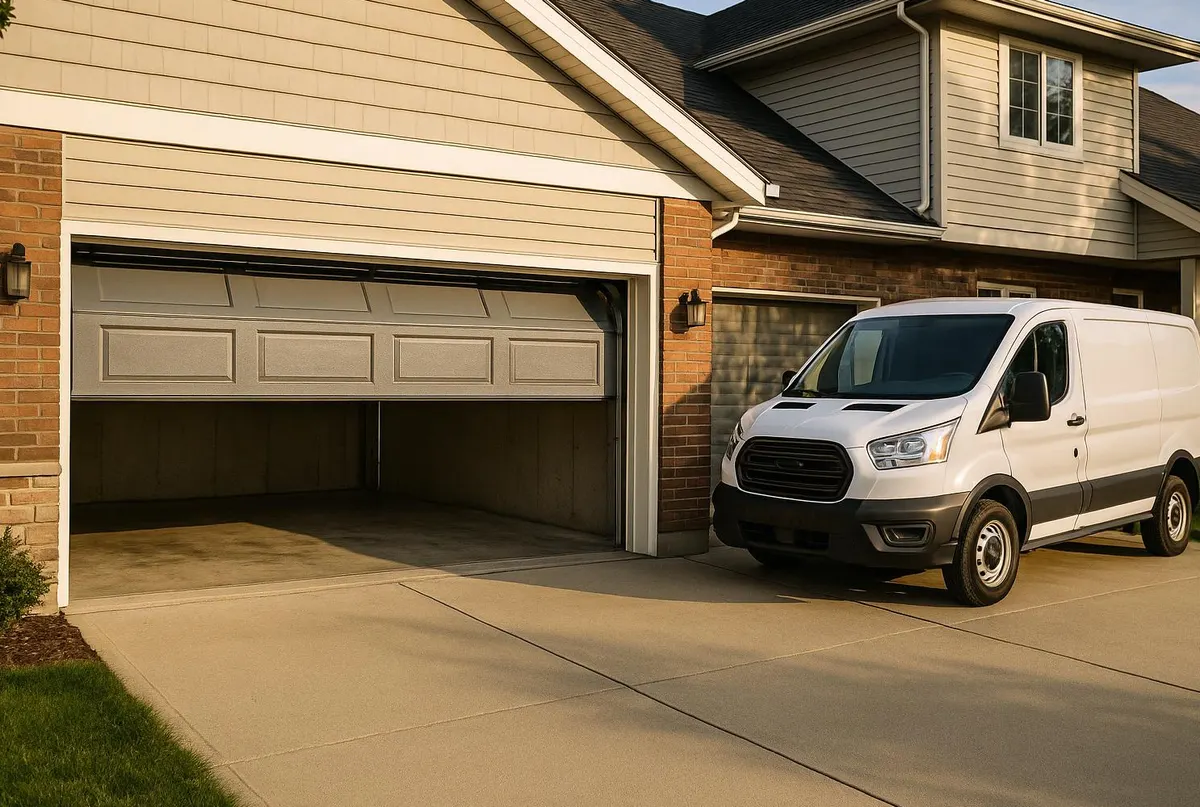
Getting your garage door ready for winter here isn't about frost or snow — it's about the drop in humidity and the wider swing between warm afternoons and cool nights that starts once hurricane season winds down. That shift dries out lubricant, shrinks wood and composite panels, and often wakes up pests looking for a warm, dry spot to hide. A 30-minute check now saves you a stuck door in December.
What Actually Changes This Time of Year
North Fort Myers doesn't get a hard winter, but the transition out of hurricane season brings real changes that affect your garage door:
- Humidity drops. After months of thick, wet air, the drier season can cause wood panels and trim to shrink slightly, which can loosen fasteners or open small gaps around the door frame.
- Temperature swings widen. A warm afternoon followed by a cool night means more expansion and contraction on metal tracks and hardware than you saw in the steady heat of summer.
- Rust from salt air keeps working. Coastal moisture doesn't stop just because storm season is over — any surface rust on springs, hinges, or rollers will keep spreading if it's not addressed.
- Pests look for shelter. As nights cool, lizards, roaches, and rodents often look for small gaps near garage door seals to get inside. A worn bottom seal is an open invitation.
- Snowbird season starts. Many homes in this area sit empty for stretches over the next few months, which means garage doors get left unused — and unused doors develop problems you don't notice until you're back.
A Real Walkthrough, Not Just a Glance
Here's what to actually check, not just eyeball from the driveway:
- Lubricate moving parts. Hinges, rollers, and the track itself should get a light coat of garage-door-specific lubricant (not WD-40, which attracts dust). Do this now, before cooler, drier air makes metal-on-metal noise more noticeable.
- Inspect the bottom weatherstripping. Press along the full length of the seal. If it's cracked, flattened, or pulling away from the door, replace it. This keeps out both drafts and the bugs that come looking for warmth as temperatures drop at night.
- Check panels for gaps or warping. Walk around and look at where panels meet. Humidity swings can cause minor swelling and shrinking cycles that show up as gaps, especially on composite or wood-look panels.
- Look for surface rust. Check springs, the track, hinges, and bottom brackets — especially if you're closer to the coast. Light rust can often be cleaned and treated; heavier rust on a spring means it's time to replace it before it fails under tension.
- Test the auto-reverse safety feature. Place a block of wood in the door's path and close it. It should reverse on contact. This is a 2-minute test that matters more if the door is about to sit unused for weeks at a time.
- Tighten hardware. Track brackets, hinges, and the opener's mounting bolts can loosen from vibration and temperature changes over the year. A quarter-turn with a wrench on visibly loose bolts is often all it takes.
- Clean the tracks. Afternoon downpours from the past few months may have left behind dirt and grit that's settled into the track. Wipe it out before it turns into resistance that strains the opener motor.
If You're Leaving for Part of the Winter
If your home will sit empty for weeks while you're away, a few extra steps are worth the time:
- Replace the opener's backup battery if it's more than two or three years old, so the door still works during a power blip while no one's around to notice.
- Reprogram or remove old remotes for anyone who no longer needs access — a simple security step that's easy to forget before travel.
- Ask a neighbor to manually cycle the door once a week if possible. A door that sits shut for a month straight is more likely to develop a stiff spring or stuck track than one that's used regularly.
When It's More Than Maintenance
Some of what you find on this walkthrough is a quick DIY fix. Other signs mean it's time to call in a technician instead of pushing through it:
- A spring with visible rust, a gap in the coil, or one that looks stretched compared to the other side
- A door that's noticeably heavier to lift by hand, slow to respond, or jerky partway through its cycle
- Panels with real warping or rot, not just a small gap
- An opener that's grinding, struggling, or reversing without anything in its path
If you're seeing any of that, North Fort Myers Garage Door Service can take it from there. For worn springs showing rust or fatigue after a long humid season, our garage door spring repair gets the door back to a safe, balanced lift before a worn spring snaps on its own schedule. And if your bottom seal, rollers, or cables are past saving, our cable & roller replacement service handles the parts that quietly wear out from a year of heat, moisture, and daily use — before they turn into a door that won't open at all.
If your garage door needs more than a weekend fix before the season turns, call North Fort Myers Garage Door Service. We serve North Fort Myers and the surrounding Lee County area, and we'll tell you honestly what it needs — nothing more, nothing less.