
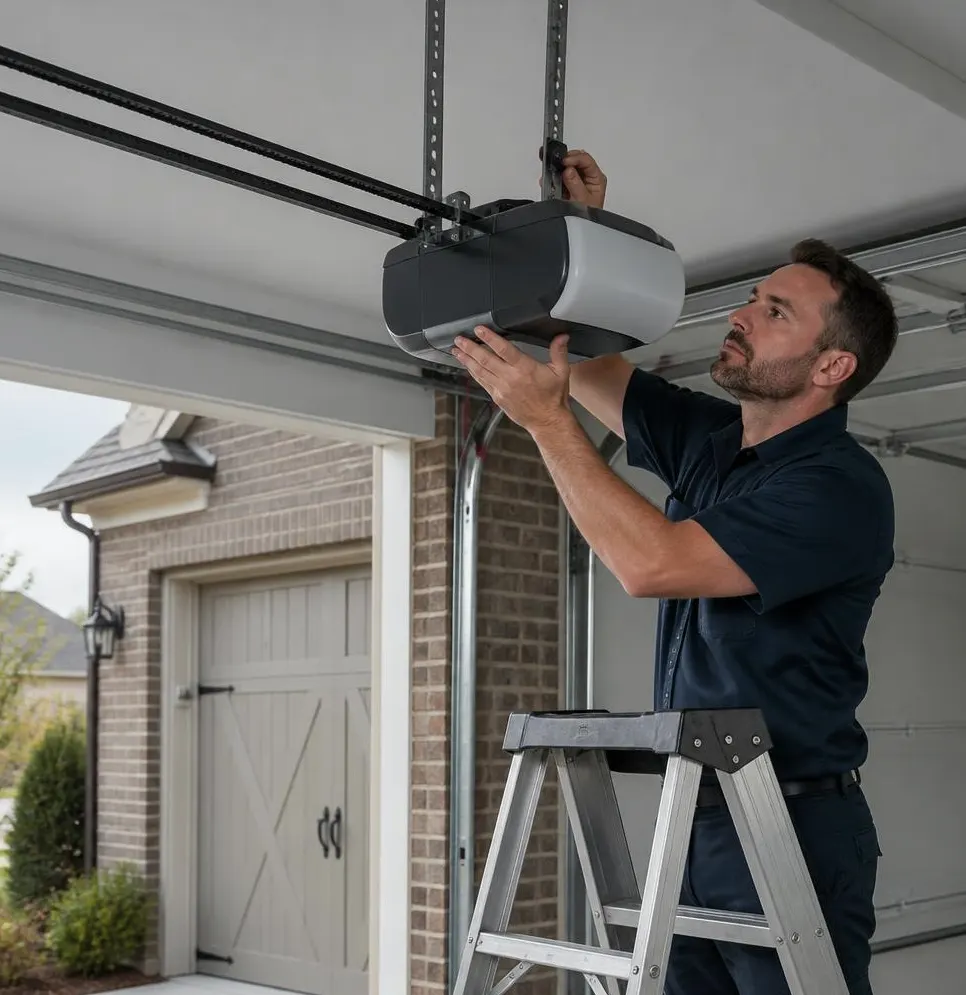
What a Technician Sees on These Calls
The call usually comes in a day or two before a storm is forecast to pass through Lee County, or sometimes right after one has. A homeowner describes a door that "bows in the middle" when the wind gusts, or a panel that rattles louder than it used to, or a track that's pulled slightly away from the frame. On inspection, it's often the same story: rollers worn smooth from years of humidity, a center support strut that was never installed, or hardware that's rusted just enough to lose its grip. None of it looked urgent last month. During a wind event, it's the difference between a door that holds and one that fails.
Why the Garage Door Is the Weakest Wall
Every other wall in a typical home is a solid, continuous surface. The garage door is a large moving panel held in place by tracks, rollers, hinges, and a spring system — mechanical parts, not a static wall. When wind hits the front of a house, pressure builds up outside and, if the garage door fails, that pressure rushes inside. The sudden change in internal pressure can push upward on the roof structure from underneath, which is a major reason garage doors are treated as a critical point of failure in wind design. A door that buckles doesn't just mean water and debris in the garage — it can contribute to much larger structural damage.
This is also why wind-load-rated doors and reinforcement kits exist for this part of Florida. A door rated for the wind pressures this region sees is built with heavier gauge steel, reinforced end stiles, and stronger track attachment points. If your door was installed years ago or came with a home you purchased, it's worth finding out what it's actually rated for rather than assuming it will hold.
Pre-Storm Checklist for This Time of Year
Hurricane season in this part of Florida runs well into the fall, and afternoon downpours and tropical moisture are still very much in play right now. Before the next system is in the forecast, walk through these checks:
- Tracks: Look for gaps between the track and the wall bracket, bent sections, or tracks that have pulled loose from the frame. A track that flexes under hand pressure will flex a lot more under wind load.
- Rollers and hinges: Salt air and humidity accelerate rust on exposed hardware, especially closer to the coast. Rollers that are cracked, flat-spotted, or grinding instead of rolling smoothly need to be swapped out before they seize or snap.
- Panels: Check for dents, cracks, or soft spots, particularly near the bottom where moisture collects. A compromised panel is a weak point the wind will find.
- Reinforcement struts: Horizontal struts across the back of the door add rigidity against wind pressure. If your door doesn't have them, or they're loose, that's worth addressing before the next watch or warning.
- Weatherstripping and bottom seal: Cracked or shrunken seals let wind-driven rain into the garage, which leads to swelling in wood-trim doors and rust on steel hardware.
- Opener battery backup: Power often goes out before and during a storm. If you need to manually close or secure the door, know where the emergency release is and make sure it isn't painted over or stuck.
Moisture, Rust, and Swelling Between Storms
Even on calmer weeks, the heat and humidity here keep working on a garage door. Steel hardware corrodes faster when it's exposed to salt-laden air, especially for homes nearer the coast or on canals. Wood composite panels can absorb moisture and swell, which throws off alignment in the tracks and puts extra strain on the opener motor. If you've noticed your door seems to stick or needs more force to close as the seasons shift, that's usually moisture-related swelling rather than a dying opener.
Signs the Door Already Weakened
- The door shudders or visibly flexes when wind gusts hit it, even with the door closed.
- One side closes slightly ahead of the other, suggesting a track or roller issue rather than a balance problem.
- Rust streaks running down from hinges or roller brackets onto the panel.
- A grinding or popping sound when the door travels, which often points to worn rollers or a cable starting to fray.
Any one of these on its own might not be an emergency, but combined with an approaching storm, they're worth addressing quickly rather than waiting to see if the door holds.
When to Call North Fort Myers Garage Door Service
If you've spotted track separation, a bowing panel, rust on critical hardware, or a door that's simply older and was never wind-rated for this area, don't wait for a storm watch to find out it's a problem. We handle Off Track Door Repair when tracks have shifted or pulled loose, and Garage Door Panel Replacement when a section has been weakened by impact, rust, or moisture. For homeowners who just want peace of mind before storm season winds down, a Garage Door Maintenance & Tune-Up covers rollers, hinges, cables, and track alignment in one visit, catching small issues before they become storm-day failures. We show up when we say we will, explain exactly what we find, and fix it right the first time — no guesswork, no upsells you don't need.
If your garage door doesn't feel storm-ready, call North Fort Myers Garage Door Service today and get it checked before the next system heads for Lee County.